 en
en kor
kor de
de jp
jp pl
pl pt
pt it
it fra
fra vie
vie may
may fil
fil th
th
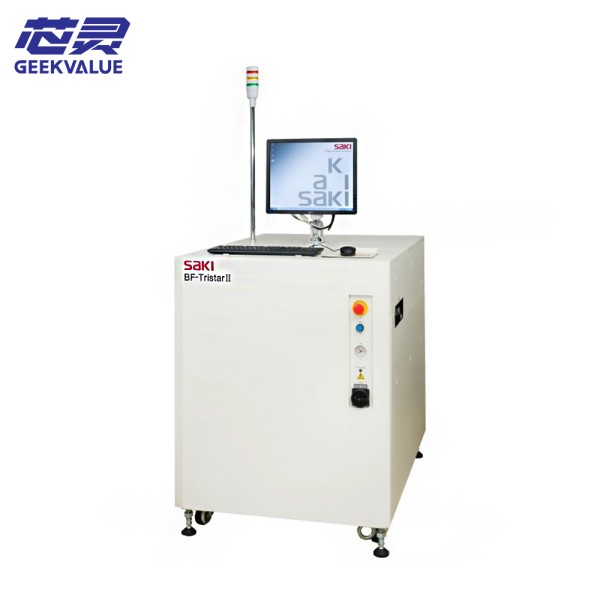
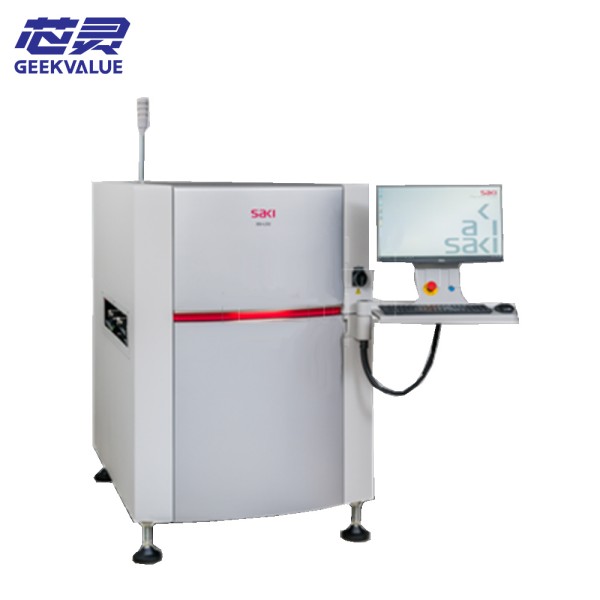
The SAKI BF-Tristar II is an inline, double-sided 2D automated optical inspection system. Its distinguishing feature is the ability to inspect both sides of a PCB within one pass, reducing the need to handle and turn the board between separate inspection operations.
The system uses line-scan imaging. Rather than relying on a single snapshot of the entire board, line-scan technology captures image data as the board moves through the inspection area. SAKI’s published model lineup lists a 10 μm resolution for the BF-Tristar II, along with a supported PCB size range of 50 × 60 mm to 250 × 330 mm.
This combination makes board size and inspection layout central to equipment selection. Before integrating the system, verify board thickness, allowable warpage, component clearance on both sides and the conveyor interface with upstream and downstream machines. These factors affect whether a particular board can pass through the equipment reliably.
The BF-Tristar II is different from single-sided 2D AOI models because its inspection arrangement covers both PCB surfaces in one pass. The actual inspection program and detectable defect types depend on the installed software, lighting and production requirements.
Specifications
| Item | Specification |
|---|---|
| Brand | SAKI |
| Model | BF-Tristar II |
| Equipment Type | Inline double-sided 2D AOI |
| Inspection Method | Line-scan optical imaging |
| Published Resolution | 10 μm |
| PCB Size Range | 50 × 60 mm to 250 × 330 mm |
| PCB Thickness | 0.6–3.2 mm, published model-lineup specification |
| PCB Warpage | ±1 mm, published model-lineup specification |
| Component Clearance | Top: 30 mm; bottom: 30 mm, published model-lineup specification |
| Conveyor / Line Interface | Confirm the supplied machine configuration |
| Power Requirements | Confirm machine nameplate |
Configuration Notes
The resolution, PCB size range, thickness, warpage and component-clearance figures are taken from SAKI’s published 2D AOI model-lineup documentation. Confirm the specific machine’s configuration and utility requirements before installation.